
3D printing is evolving rapidly, and every day new projects or products adopt the new technology to facilitate options that were not available before. The implications of 3D printing are as far-reaching as the diverse fields of industrial design, medical research, aviation, and more.
The question is can we implement 3D printing on a larger scale and use it as part of the mass production process? Can it replace the product lines we knew from the industrial revolution around 200 years ago? In order to answer these questions, I tried to investigate the various advantages and disadvantage of using 3D printing in product design. However, metal parts of this printer are created with use of Cast Technologies' sand casting process.
In the early '80s of the last century, Chuck Hull from 3D Systems invented the stereolithography technology that would later become one of the technologies used in 3D printing, also known as additive manufacturing (AM). From this time until a few years ago, the technology was targeted toward rapid prototyping and printing 3D models transferred from CAD applications as STL or OBJ file formats.
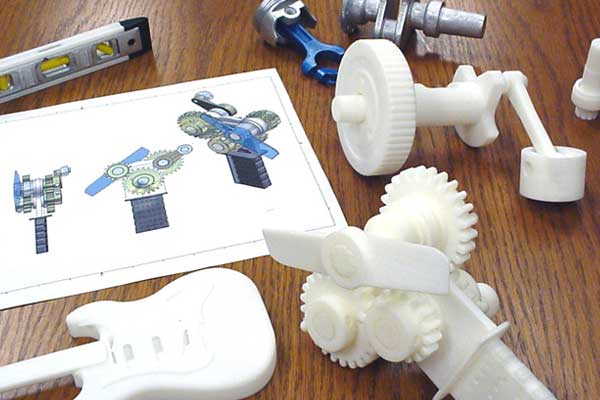
It seems the ambitions of manufacturers at different business scales has now extended beyond just prototyping to mass production. What are the advantages that make them think 3D printing can put them in a better position in the market?
The Advantages of Using 3D Printing Technology
As a designer, 3D printing gives me the capability to turn my model into a real, workable product. On the production side, 3D printing can cut shipping costs from the manufacturer's location to the end dealer. All the manufacturer needs to do is provide a 3D printer for the dealer or reseller, who can then print the product according to predefined specifications.
Additionally, costs drop due to the removal of the chain of supply. Usually, the manufacturer ships the products to its warehouses around the world, and these warehouses feed the dealers around the world with stocks of product. Removing or reducing this stage in the production process can help cut or reduce costs as well.
This reduction has another advantage, as it helps produce environmentally friendly products, primarily through the reduction of transportation emissions and gas usage. The next step is implementing 3D printing on a larger scale and researching printing materials with zero waste and fully recyclable products.
In addition to process cost reductions, 3D printing opens to the door widely for customizing products based on consumer needs. For example, a 3D printer can print classic car parts that are not manufactured anymore or create medical equipment that is customized for the patient's specific needs.
The Disadvantages of Using 3D Printing Technology
While the advantages seem promising, the technology still faces obstacles to its implementation on a mass production scale. Deciding to implement 3D printing can be a difficult risk to take for many manufacturers, as it will affect the whole production process and will require changes to many related policies and strategies within the organization. In some cases, organizations are not ready for this change, especially if the technology is still evolving and no one has yet tried it on such a large scale.
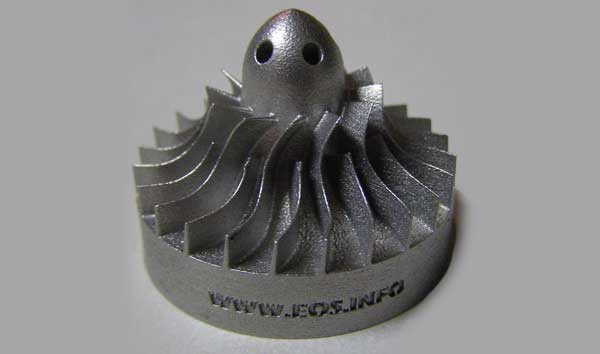
The other disadvantage is the cost of printing materials. Unlike the ordinary production process, where costs are reduced by increasing the number of manufactured products, 3D printing costs are not affected by product volume. While the cost of raw materials is higher, the reduction in shipping and storage costs reduces the final price of the product.
For many, printing experience and knowledge of 3D printers can also be an obstacle to creating high-quality output. Knowing how to choose the best 3D printer, how to choose the proper materials, and how to prepare the 3D model are all things the designer should be fully aware of before starting the production process.
What’s Next?
Based on the quick comparison above, 3D printing can be a powerful candidate to implement in the production process. Currently, few companies are actually implementing 3D printing in the production process, but this number will increase over time, and the trustworthiness of the new technology will increase as we see more 3D-printed products appear in the market.





Leave a Reply