
Summary: The design thinking process is a mindset grounded in the core characteristics of design and used to solve problems and drive innovation. The Double Diamond design thinking process consists of four key stages: Discover, Define, Develop, and Deliver, and provides a practical model to apply design thinking.
We explored design thinking and various frameworks in articles, including the Double Diamond design thinking process developed by the British Design Council. Like other design thinking processes, it uses critical thinking and reflective practice to apply design characteristics to reach creative solutions and innovative ideas.
Related articles:
- Design Thinking Guide: What, Why and How?
- How Design Thinking Reshaped Microsoft Products
- Design Thinking Case Study: Innovation at Apple
- IBM Design Thinking Model: A Shift Toward Big Enterprises
The basis of this practice highlights an essential fact: the value creation of the design thinking process does not rely on the steps but on the appreciation of design characteristics as they are applied. Any design thinking process is useless without a clear understanding of the design strategy and characteristics.
The Design Thinking Characteristics
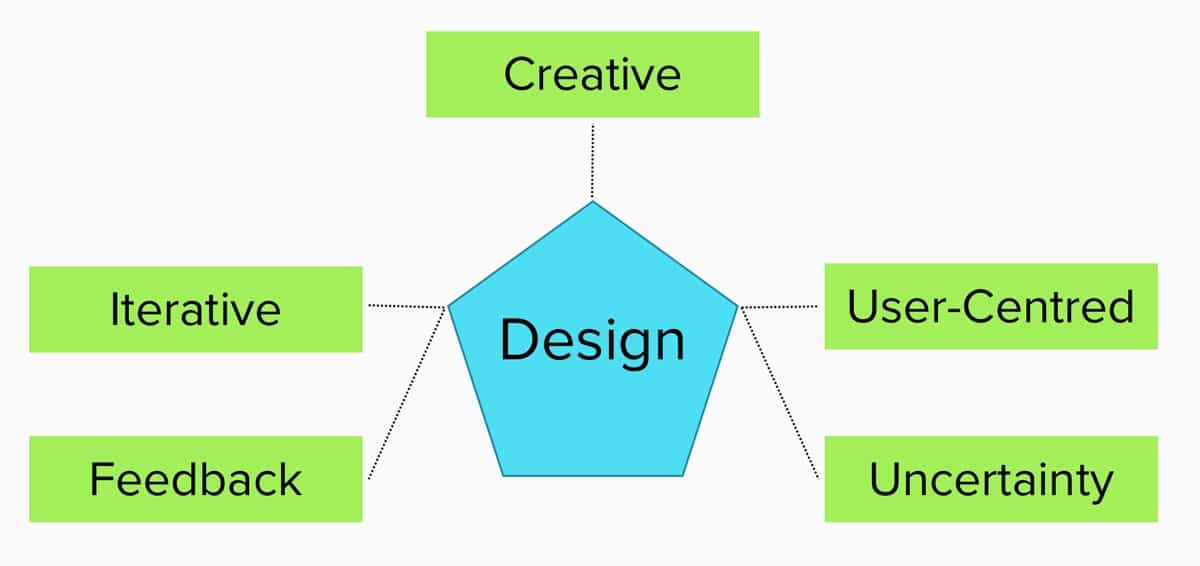
The main aim of design thinking is to guide its application in real-life scenarios. And through this application, the characteristics of the design thinking mindset bubble out of practice. It helps people who don't have this design mindset achieve its benefits, and by repeating the practice, the design thinking practice improves. These characteristics include:
- Creative: The design process appreciates ideas and explores them in an inclusive environment. The diversity of ideas presents the primary source of innovative outcomes.
- User-Centred Design: design thinking aims to solve people's problems and address their needs. Therefore, user needs are at the heart of the design process, reflecting the nature of the starting point in any design thinking process, which explores the problem and depends on qualitative data.
- Uncertainty: Every design task starts with uncertainty. In comparison, other processes, such as the stage-gate innovation process, jump directly to defining the problem. The design process is inclusive, so the ideation process acknowledges different filtered ideas as the team moves from one step to another.
- Iterative: At the core of the design process is reliance on iteration and testing rather than detailed requirements. Testing and improving prototypes with user involvement helps build user-centred solutions.
- Feedback from real-world use of the product or service is a critical element that designers use to improve the product in the future.
These characteristics are derived from the work of key scholars and practitioners in design thinking. See the Design Thinking Books article to explore the key books and papers that investigated design thinking.
What is the Double Diamond?
The Design Council introduced the Double Diamond in 2004. It presents a framework that enables companies to apply design principles to generate creative solutions and innovative ideas. It includes four steps: Discover, Define, Develop and Deliver. We will explore each step in this article later. Many companies have adopted the Double Diamond design process, including Apple, Microsoft, Starbucks, and others. An updated version of the Double Diamond was introduced in 2019, which is agile and visualises how it can fit inside the organisation.
The double diamond is based on the frame innovation approach coined by Kees Dorst, Professor of Design Innovation at the University of Technology. In his approach, the design process can be divided into problem space and solution space. The problem space is when designers explore the problem, including its complex nature, and end with a clear definition of the problem. It is where the majority of the unique design characteristics and value lie, including creativity and uncertainty. The second stage is the solution space, where ideas are generated, visualised, and tested through prototypes. At the end of this stage, the final product is created and delivered to the end user.
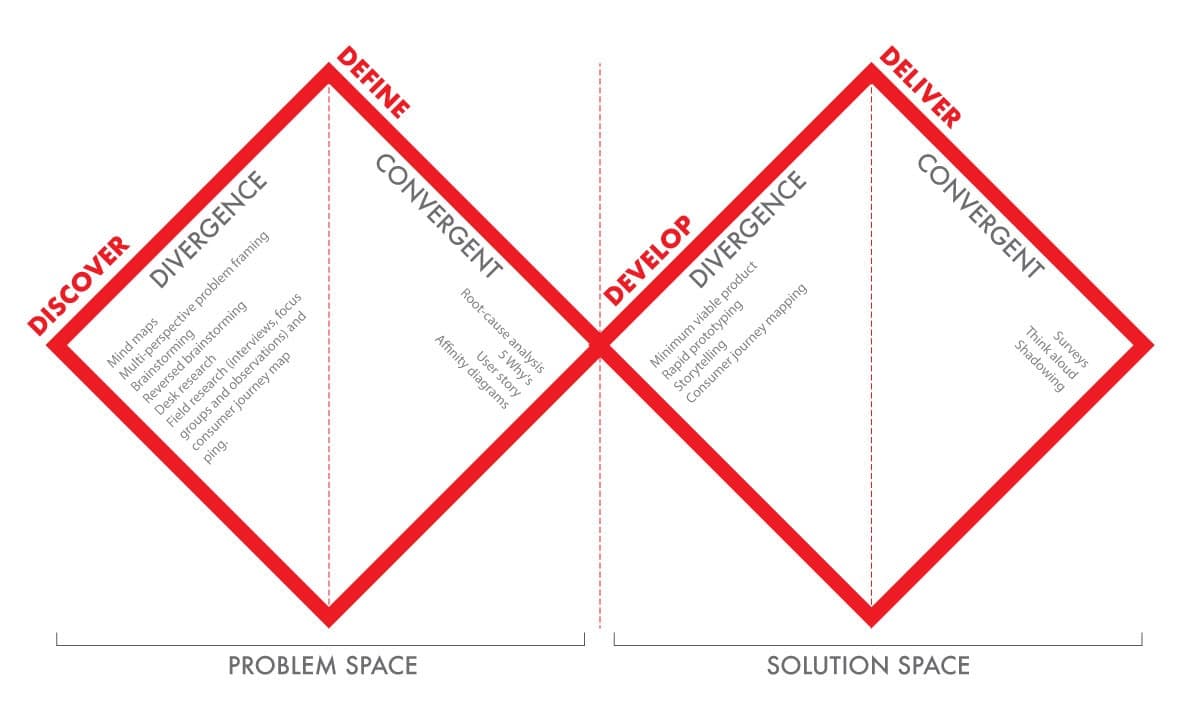
The frame innovation is applied to the Double Diamond framework, with the first two steps (Discover and Define) representing the first stage (problem space), and the third and fourth steps (Develop and Deliver) representing the second stage (solution space). We will explore the four steps of the Double Diamond design process, which remain unchanged between the 2004 and 2019 versions of the framework. Then we will provide an overview of the changes applied to the 2019 version.
As we explore the Double Diamond design process, we will briefly highlight some of the tools that could be used in each of the four steps. Some of these tools were covered in previous articles, while others will be covered in further articles.
Pre-Process Preparation
The Double Diamond design process is a highly collaborative team practice that requires complete understanding and integration between the team members. Accordingly, an effective selection of the team and place is essential. The team members should represent different areas relevant to the project. Considering this factor ensures that the team members address different areas, especially in complex design projects.

Regarding the practice location, I typically run all meetings in one place, which is comfortable and has enough wall space. A target whiteboard is always beneficial for two main reasons:
1- There will be many brainstorming drafts and sticky notes to visualise in front of the team through the process, to keep in mind all the aspects of the design challenge at hand
2- Returning to the meeting room every morning and reviewing the work done ensures the focus and continuity of the ideas as the team moves from one step to another.
Step 1: Discover
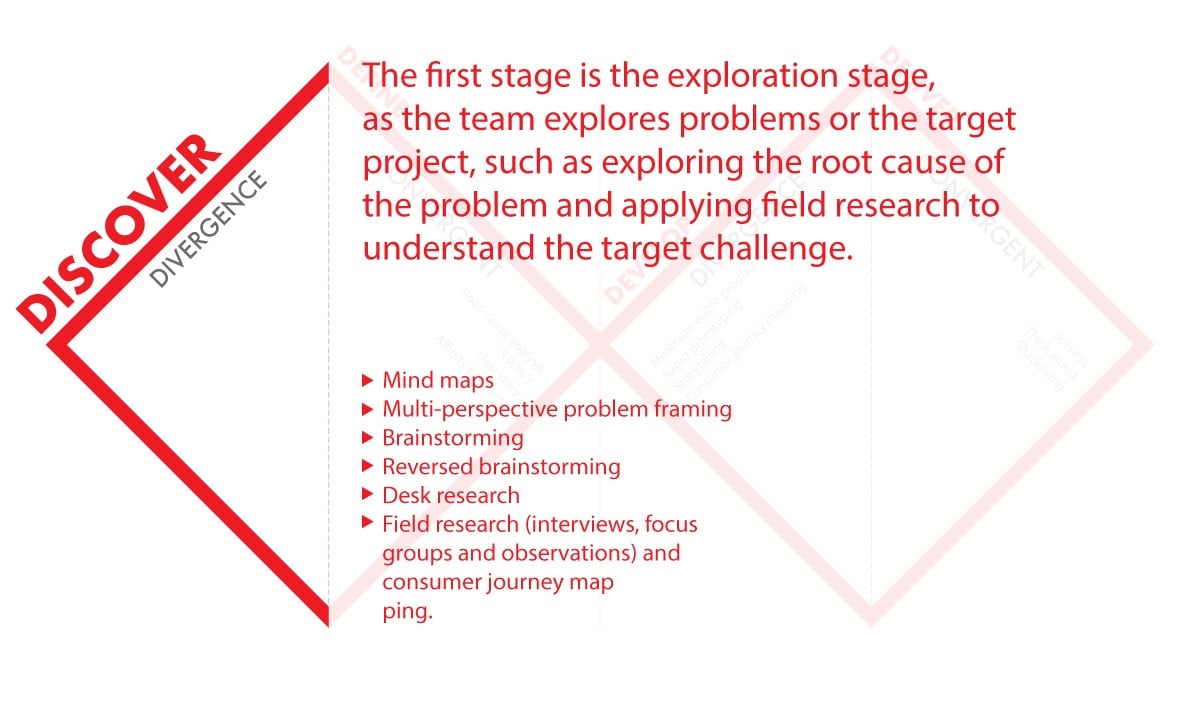
The first stage is the exploration stage, in which the team explores problems or the target project, such as identifying root causes and conducting field research to understand the target challenge. The target of this step is to examine and collect information about the design challenge. The Discover step is divergent, which means that all ideas and information are considered and included. This step acknowledges uncertainty, as the team doesn't have a clear idea of the problem, similar to agile and lean processes. Support for creativity is applied based on the tools used in this step. Examples of these tools are below:
Mind Maps: This tool is used to explore different ideas about a core problem. So, the main topic or issue is written in the centre and expanded and connected. Mind maps can be drawn on paper, on whiteboards, or using online mind-mapping tools.
Multi-Perspective Problem Framing (MPPF): The MPPF was coined by Dr Stuart English at the School of Design, Northumbria University. The method is based on the problem/solution framing aspect we explored earlier. The process is based on integrated mind maps, where six cornerstones are explored to understand the problem. Click on the MPPF link above to access the published paper about the application of the method.
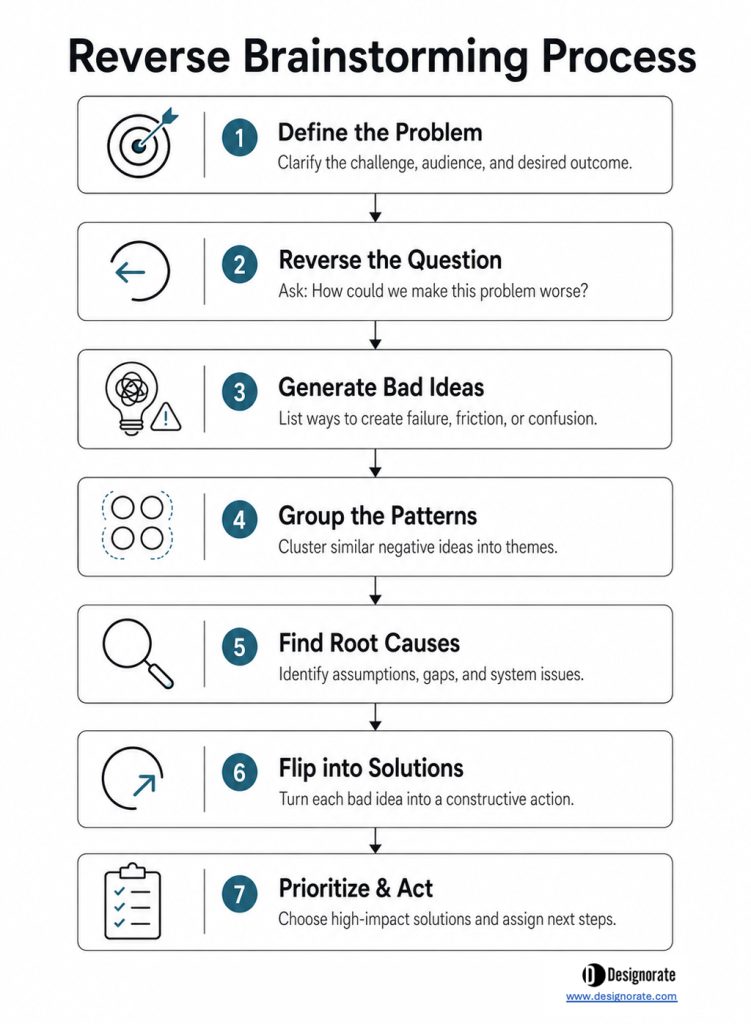
Brainstorming and Reversed Brainstorming: Brainstorming is a group meeting that aims to explore ideas through group discussion and diverse contributions. In contrast, reverse brainstorming is used when the team feels out of ideas. In this tool, the team worsens the problem to shift the views toward opportunities that can ignite solutions.
Desk research: The first step in exploring a problem is to review existing resources and publications on the topic to expand our knowledge.
Field research (primary research) uses various methods to explore the problem, such as interviews, focus groups, and observation.
- Interviews: you can hold online or face-to-face meetings with the target people involved in the problem being investigated. It can be structured, semi-structured, or unstructured, depending on the questions. The semi-structured interview uses predefined questions, but you can expand on them during the discussion to gather more information.
- Focus groups are similar to interviews, but they are group discussions rather than one-on-one. It can be cheaper and easier than the interviews. However, it has some drawbacks, such as people being influenced by each other's ideas or sometimes being too shy to share their own.
- Observation: For me, this is the core of any design practice (or human practice). In this method, you can observe people in their lives, see how they interact with the problem, and document this in notes that will be analysed later. You can use the qualitative data using thematic analysis.
- Consumer Journey Mapping: In this method, the design team observes the user experience as users use the product or service. For example, the team can observe the user while making online ticket bookings or a shopping experience.
Step 2: Define
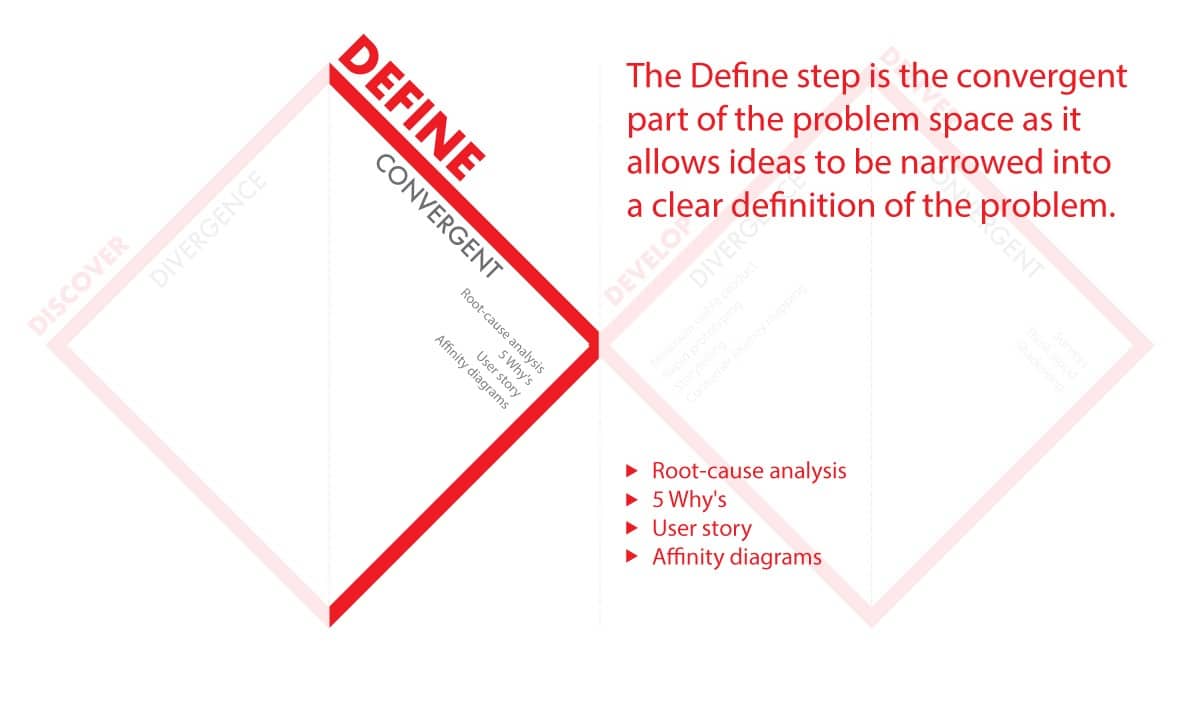
The Define step is the convergent part of the problem space, as it narrows ideas into a clear definition of the problem. This definition will guide the team through the following prototyping and testing steps. This convergent step involves analysing evidence and filtering ideas to reach a workable, clear brief. The tools below are examples of tools that could be used in this step:
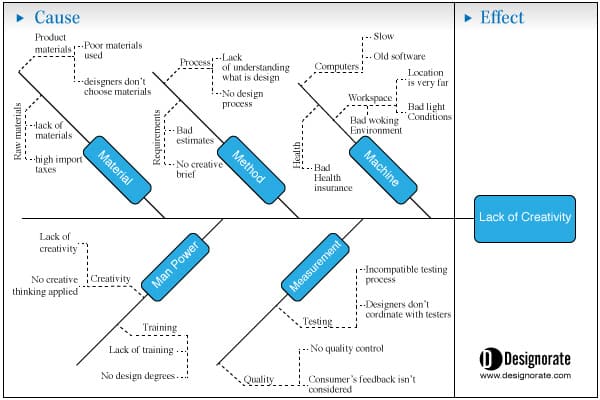
Root-cause analysis (AKA fish-bone analysis and Ishikawa diagram): After collecting sufficient information about the problems, you can analyse the data to understand the actual cause (root problem) to find a sustainable solution. The tool aims to investigate six main areas that can be the root cause of any problem (measurements, materials, personnel, environment, methods and machines).
5 Whys: Another method for root cause analysis is the 5 Whys. It simply asks "why" five times until you reach the root cause of the problem. Then, this root cause becomes the main cornerstone of the problem definition.
User story: This tool is commonly used in UX research because it captures the target user's type, practices, and final goal. An example of a user story can be:
As [description of the user], I want to [function] so that [benefit].
Affinity diagrams: a tool that works similarly to Card Sorting. Furthermore, it allows you to organise and prioritise the data based on its importance. Then you can set your problem description based on the recorded data priority.
Step 3: Develop
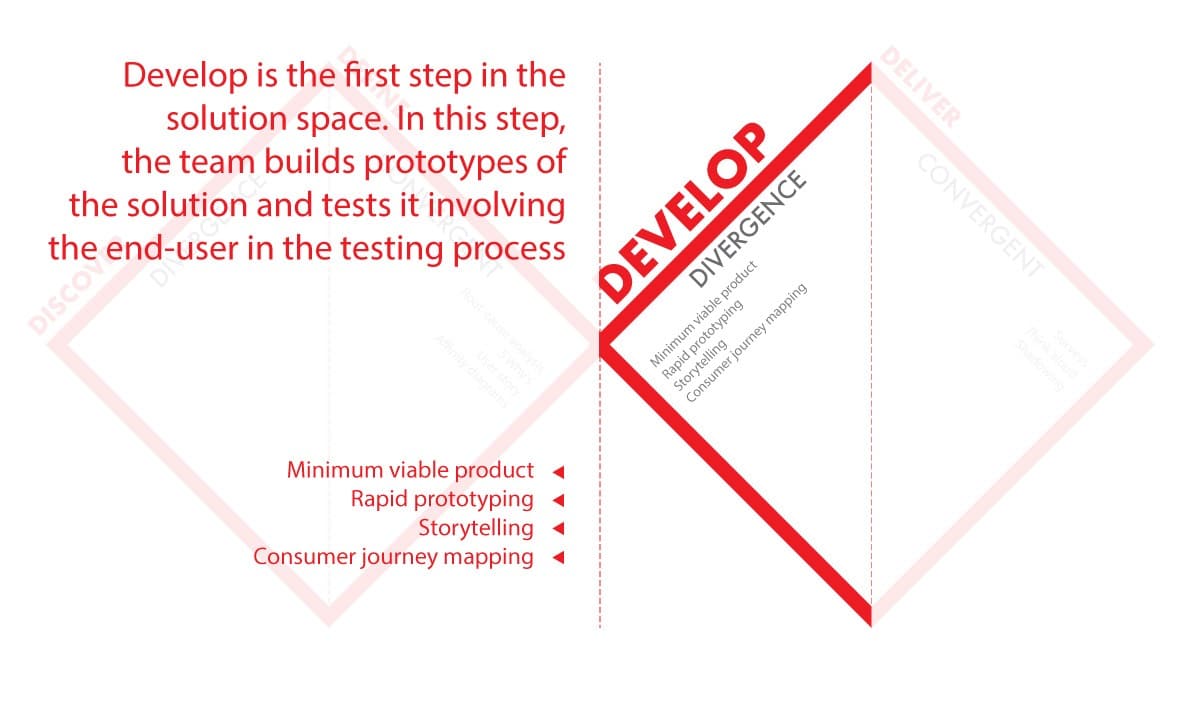
Develop is the first step in the solution space. In this step, the team builds prototypes of the solution and tests them, involving the end-user in the testing process through a divergent approach, meaning that all types of solutions are considered prototypes. First, the team needs to clearly define the target users by creating a persona for each. Persona is a virtual character that represents the user and helps the design team consider the user's characteristics throughout the prototype and development process. Several tools are used in this process:
Minimum Viable Product (MVP): The MVP is a limited version of the product with only the features needed to make it workable, so users can test it. Also, the team can evaluate the product or the service in a real-life scenario. Then, the team uses the feedback to improve the final complete product.
Rapid prototyping: Technologies such as 3D printing can create a sample of the product, allowing the team to see a virtual version and evaluate product ideas.
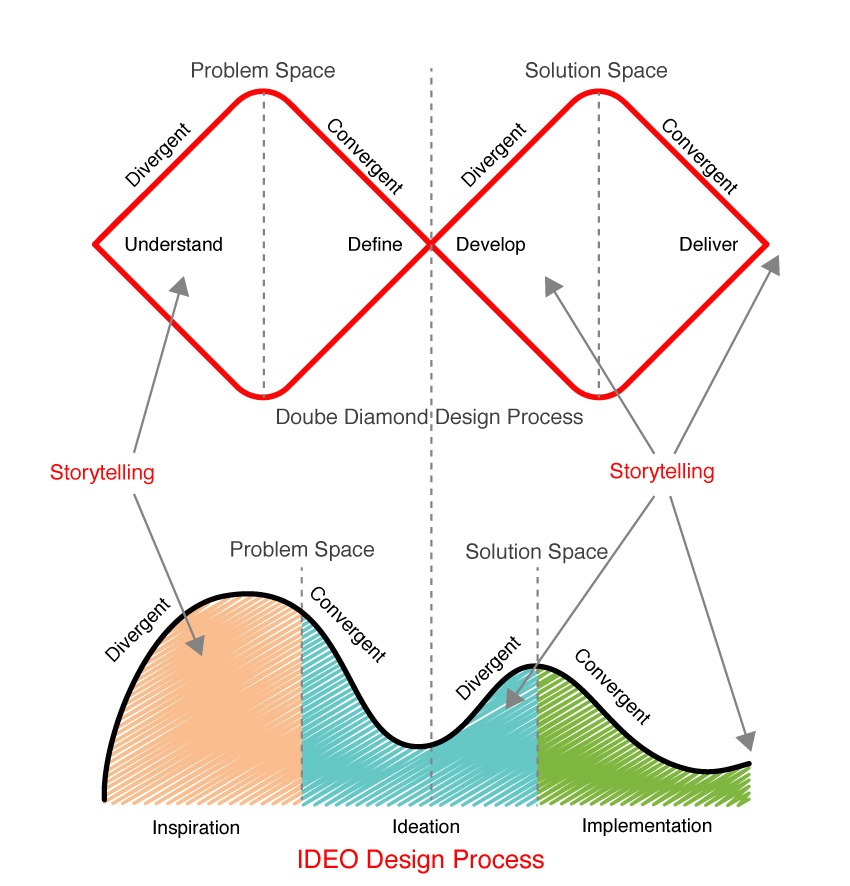
- Storytelling: Storytelling can be used in both the Discover and the Develop steps. Storytelling allows the team to explore prototypes and share their experience as a story.
- Consumer Journey Mapping: As in previous uses, the team can use it to test and evaluate the service.
Step 4: Deliver
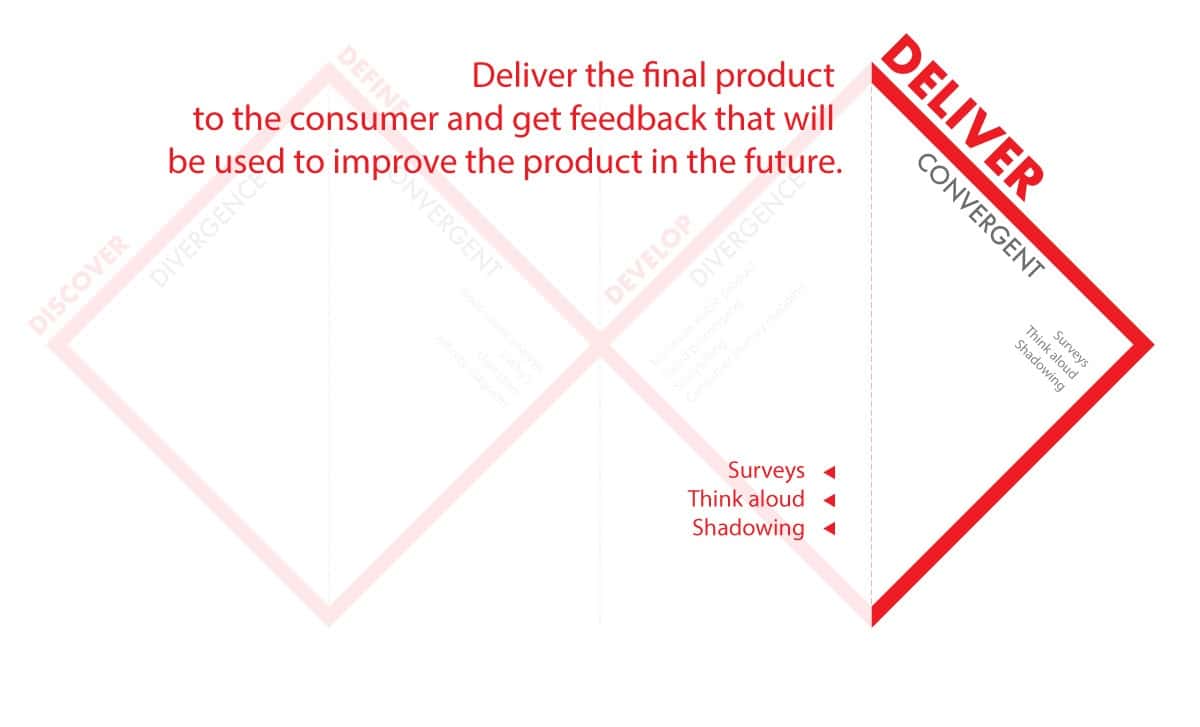
The relation between the designer and the product doesn't end here. Once the product is delivered, the team begins collecting user feedback and evaluating expertise. These comments and feedback are used to improve the future versions of the product. The Deliver is a conversion step in which ideas are narrowed down to a single final product. Examples of the tools that could be used in this step include:
- Surveys: They are the most common tools designers and marketers use to gather feedback through ratings or simple questionnaires, collecting details on users' comments and opinions about the product.
- Think Aloud: In this tool, the consumer uses the product while describing the experience loudly. The designers take notes or record the consumer experience.
- Shadowing: Another testing tool involves one design team following the user (as a shadow) and taking notes as the user uses the product.
The New Double Diamond Design Process Framework
As a designer, the linear view of the design process is unrealistic, whether in the Double Diamond or any other linear design process. The design practice is non-linear, and how the ideas are formed, visualised and evaluated does not follow a linear waterfall process. Sometimes, designers jump directly to prototyping based on base requirements (lean process). This approach helps designers test prototypes with users and improve them through frequent user testing. Sometimes, the client has precise data that you jump directly to the third step (Develop). In the recent version of the Double Diamond (2019), the Design Council identified these issues and presented the updated Double Diamond framework.
The whole process starts with a challenge and ends with an outcome, running in a collaborative environment that connects team members, consumers, stakeholders, and partners, as well as leadership on the other side.
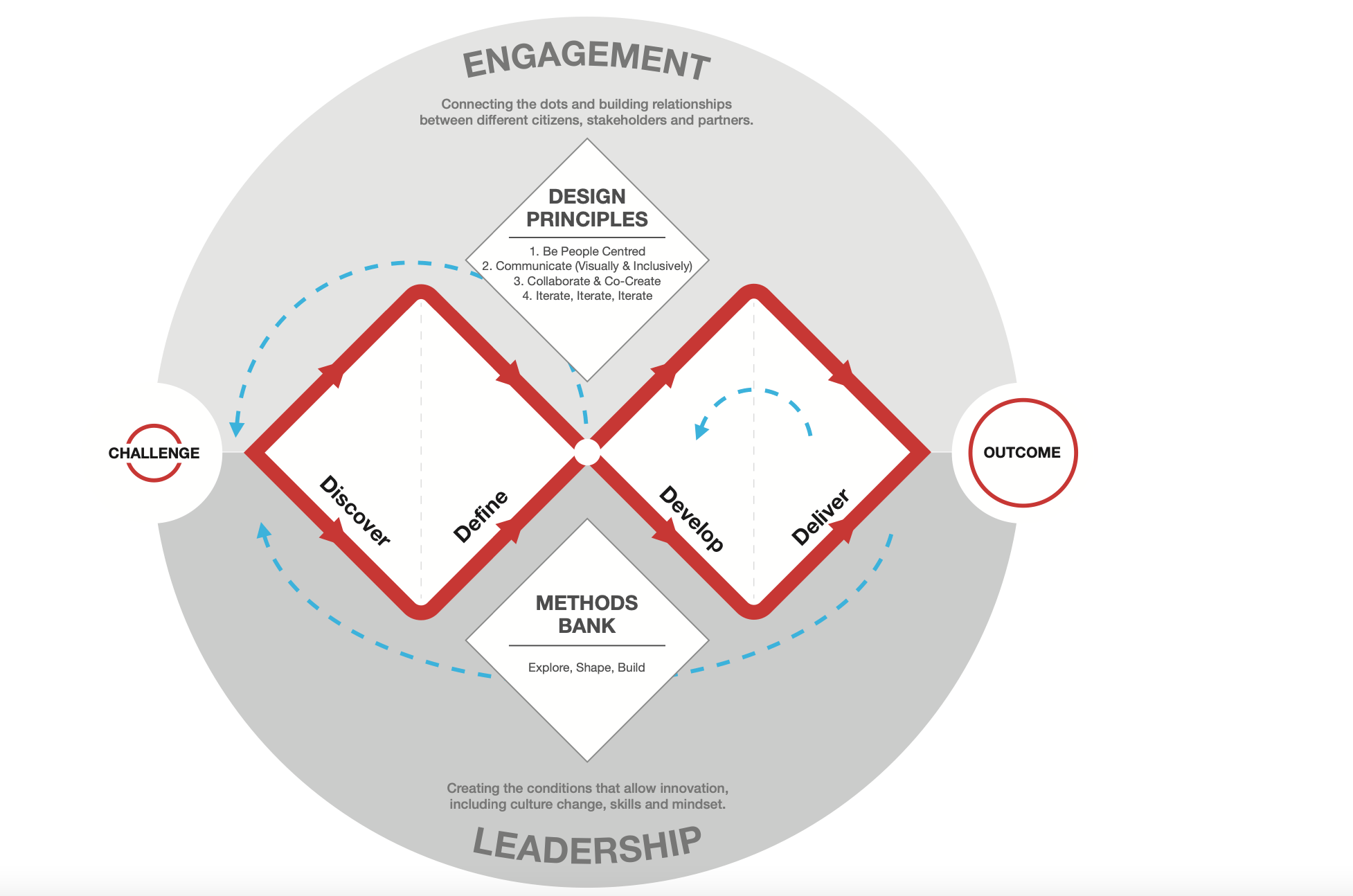
Figure 11 shows the updated Double Diamond, with an agile structure added, making it more realistic than the older version. In the new framework, the team can jump back to the Discover step from the problem definition point if they think more information needs to be explored or collected to build a clear definition of the problem. Also, they can jump back from Deliver to Develop if product testing shows the need for additional prototypes. Finally, consumer usage feedback is forwarded to the Discover step for future product improvements.
The video below shows a brief summary of what we explored in this article:
External Resources:
- Design Council’s framework for innovation
- The Double Diamond: A universally accepted depiction of the design process
Conclusion
Any application of the design thinking process is aimless without a clear understanding of the design characteristics. The main aim of the process is to achieve these characteristics and use them to reflect a design strategy within the organisation. The Double Diamond design process, developed by the British Design Council, aims to achieve creativity and innovation through applying the design thinking methodology. It involves four steps (Discover, Define, Develop and Deliver) that take the design process from the problem space to the solution space. Above, we briefly explore each step and provide examples of tools that could be used at each step.
One drawback of the Double Diamond design process is its linear (waterfall) nature. This structure did not reflect the actual lean practice of the design process. So, a new version of the Double Diamond was introduced in 2019, adding iterative features that turn it into an iterative lean process. Also, the new framework considers the nature of the organisation structure and puts the design characteristics at the heart of the process.
Bibliography
Brown, T. and Katz, B., 2011. Change by design. Journal of Product Innovation Management, 28(3), pp.381-383.
Buchanan, R., 1992. Wicked problems in design thinking. Design issues, 8(2), pp.5-21.
Cross, N., 2023. Design thinking: Understanding how designers think and work. Bloomsbury Publishing.
Dorst, K., 2015. Frame innovation: Create new thinking by design. MIT press.
Gustafsson, D., 2019. Analysing the Double diamond design process through research & implementation.
Lawson, B., 2006. How designers think. Routledge.
Rittel, H.W. and Webber, M.M., 1973. Dilemmas in a general theory of planning. Policy sciences, 4(2), pp.155-169.
Simon, H.A., 1988. The science of design: Creating the artificial. Design Issues, pp.67-82.
West, J., Fusari, G., Raby, E., Alwani, R., Meldaikyte, G., Wojdecka, A. and Matthews, E., 2018, June. Developing the double diamond process for implementation. In Design4Health, Melbourne. Proceedings of the Fourth International Conference on Design4Health 2017, 4-7 Dec 2017, Melbourne, Victoria, Australia: (Vol. 1, pp. 310-312). Sheffield Hallam University and Swinburne University of Technology.





Thank you so much for your in-depth description, videos and clear images.
The videos help my students as well.
Dear Anne, I am glad that you find my article helpful. Also, I am fascinated that you teach the Double Diamond at your collage, feel free to share your experience teaching it for this age of students contact (@) rafiqelmansy (.) com