
The term design thinking has been widely used to describe the application of the design process's characteristics and distinguish it from other development processes, such as the focus of user needs. These characteristics have been framed into different design process models such as the Double Diamond, IDEO model, and IBM Design Thinking. In my previous article (How to Successfully Apply Inspiration in Design Thinking), we explored the different models of design process stages. The outcome of applying design has been proven through different case studies from various company sizes and industries, such as Apple, Microsoft, IBM, IKEA, AirBnB, Starbucks, and others. However, organizations have varied structures, capabilities, and outcomes. Accordingly, there should be a measuring framework that can help companies to evaluate the impact of applying design with each project inside the company and compare this outcome with the currently applied processes (Design Thinking Guide: What, Why and How).
The Impact of Applying Design Thinking
Through observing the applications of the design process in different companies ( How Inclusive Design Reshaped Microsoft Products), we can identify a number of general benefits of applying the application of the design thinking process. Understanding these benefits helps us to build a measurable framework that contributes for understanding the impact of design thinking inside the organization. These benefits include the following:
Focus on the consumer needs.
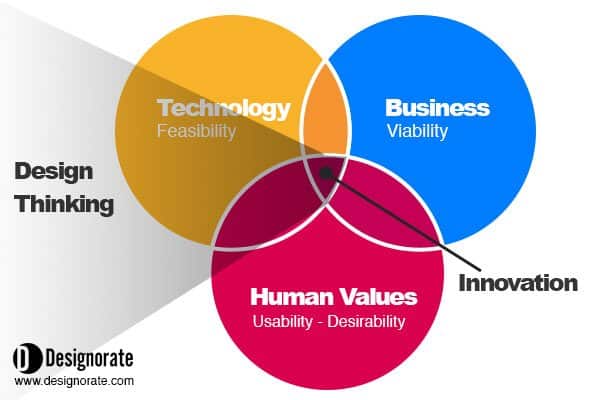
The design process aims to achieve a three-corner triangle; user needs, business feasibility, and technology viability. While managers approach projects from a business-oriented point of view and engineers approach projects from a technology-oriented point of view, designers tend to focus on the user needs and solve the problems they face before, during, and after using the product or service. All the design process models agree to start with understanding the user needs and address them during the different production stages.
Improving the innovation capabilities
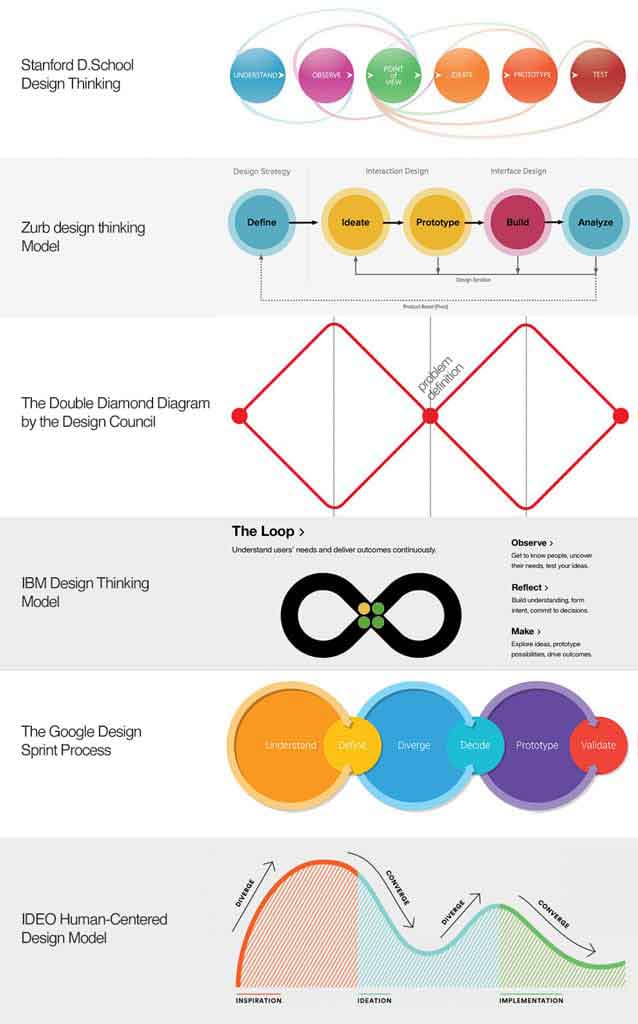
The design process follows similar stages to critical thinking. It starts with a diversion of ideas that can be discussed and examined during the conversion stage that tends to select the idea before moving to the prototyping stage. This methodology helps companies to get outside the box and explore ideas outside the traditional thinking inside the organization (case study: Design Thinking Case Study: Innovation at Apple).
Supporting agility
The design process is agile at its core, as the team can move between the different phases when needed. This iteration nature of the process gives it strength as the team can always return to the initial stages and examine different ideas.
Measuring the Impact of Design Thinking
Unfortunately, while there are many design process models presented over the last few years, there are few suggestions of how we can measure the outcome of the design process. Only 24% of the design process's users measure the impact of the process on projects 1. This lack of knowledge stands as a barrier between companies and their application for design as they don’t have proof of the efficiency of the process (What is Thematic Analysis? And How to Apply in Design Thinking).
Stanford D.School and Has Plattner Measurement Framework
While there is no one way to measure the design outcome 2. In 2015, a paper published by the Stanford d.school and Has Plattner Institute, Measuring the Impact of Design Thinking, including surveys and interviews with 403 design practitioners from large for-profit companies. The paper aims to determine the return on investment (ROI) of applying the design process. The paper suggested a number of criteria that can be used to build a measurement framework. These criteria include the following:
Customer feedback – the feedback from the consumers after using the product or service to determine the level of satisfaction based on their testimonials
Design thinking activities – the number of design processes and employee participants in it
“Immediate” results – the number of implemented projects based on design sessions
Traditional KPIs – units such as financial performance, market success, and revenue outcome of design projects
Reflective Measurements – questionnaires and surveys completed internally and externally by participants in design processes, including the practitioners, employees, and consumers
Working culture – the impact of the design inside the organization measured by factors such as motivation, team collaboration, and engagement
ROI of Design Thinking Framework
The ROI of the Design Thinking framework was introduced by Professor Jeanne Liedtka, University of Virginia’s Darden School of Business. In her paper, Exploring the Impact of Design Thinking in Action, she examined 22 companies using design practice over a research period of three years. In her framework, Jeanne suggested that the ROI of the design is based on three main factors 3:
Practice - Identify the most effective elements actually practised under the rubric of “design thinking.”
Mechanisms - Assess design's value for enhancing innovation outcomes
Impact - Evaluate the overall impact of design in practice
Based on her presentation on the Mural, the below-animated figure summarise the different elements of each factor:
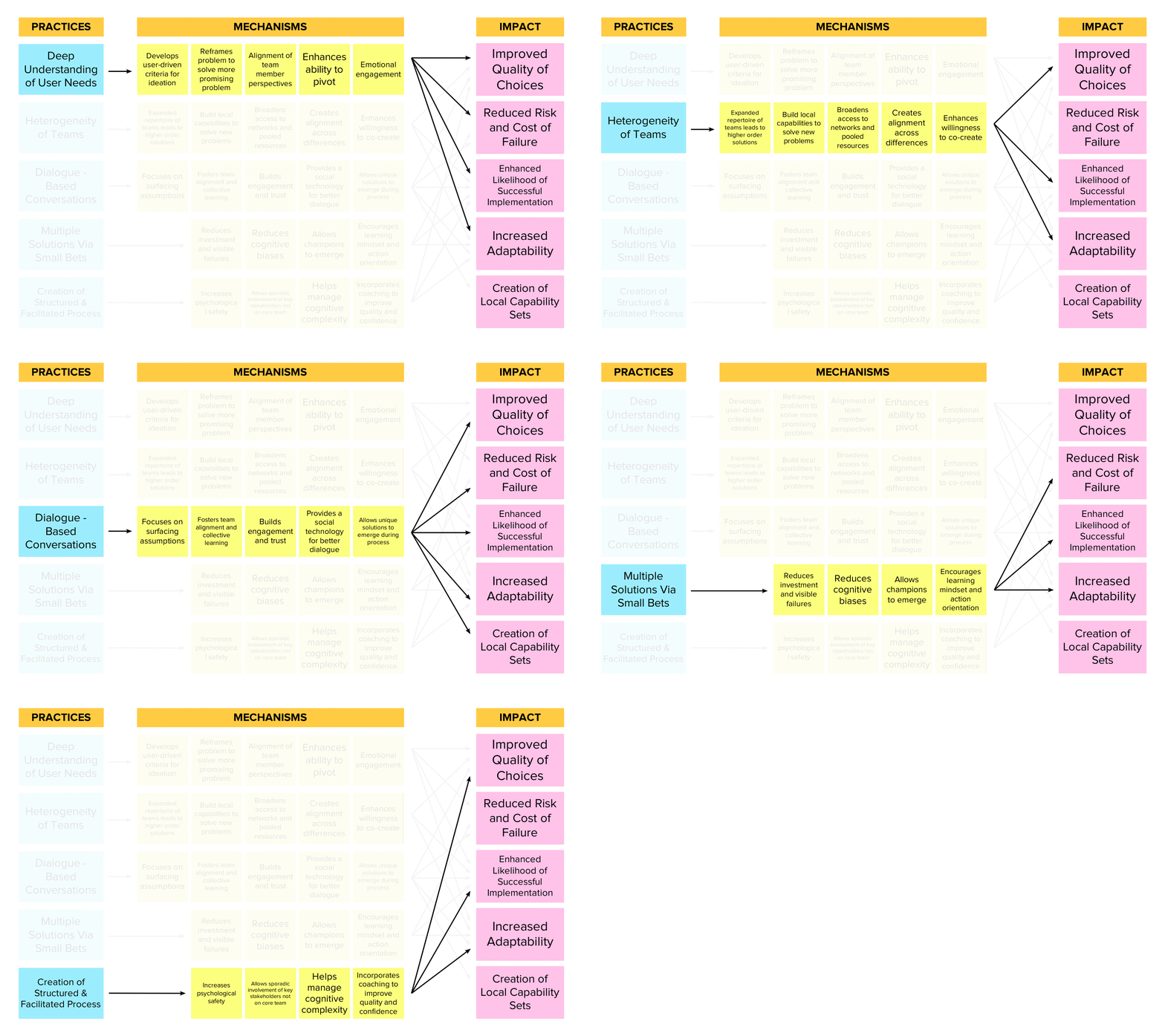
Both suggested frameworks tend to evaluate the value of the design based on its special nature. However, the latter framework is more details about the elements included in each factor which may vary from one company to another. I believe this framework doesn’t consider the flexibility of the design process and how it may be altered based on the organizational environment and projects.
Conclusion
The design process has proven successful in many companies, including Fortune 500 firms such as IBM, Microsoft, Apple, and others. However, companies vary based on their capabilities and environment. Accordingly, the design's impact may vary as well. Therefore, it is more vital now than before to build a framework that helps companies to measure the impact of the design process on project outcomes in order to understand the real-life benefits that can be gained through the application of design. Until now, there has been a lack of initiatives that aim to build a measurement framework. The above two researches introduced two frameworks that can use to measure the ROI of design thinking and can be used as a guide for companies to build their own framework based on the nature of their projects.
1 Rapp, K., & Stroup, C. (2016). How can organizations adopt and measure design thinking processes? Retrieved [8 April 2018] from Cornell University, ILR School site: http://digitalcommons.ilr.cornell.edu/student/138
2 Schmiedgen, J. et al (2016). Measuring the Impact of Design Thinking In H. Plattner et al. (Ed.), Design Thinking Research: Making Design Thinking Foundational (pp. 157-170). Switzerland: Springer International Publishing.
3 Liedtka, J. (2017). Evaluating the Impact of Design Thinking in Action. Academy of Management Proceedings. (1) 2017.





Leave a Reply