
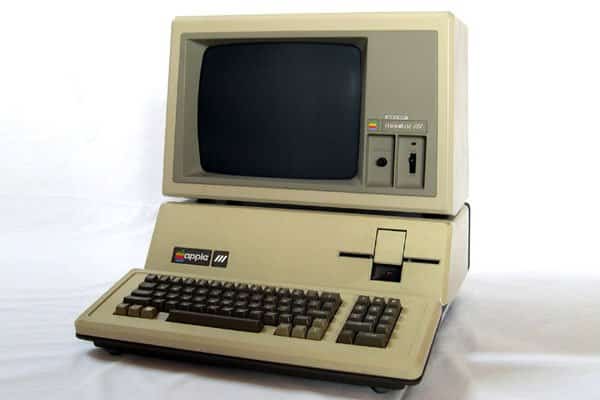
Apple is one of the leading companies that is renowned for its unique products and brand. A short talk with an Apple user reveals there is an emotional relation between consumers and Apple products, including every “i” product created in the past two decades. Why are Apple products different from their competitors’ products? How does […]
Design Thinking in Schools: Building a Generation of Innovators

Observing today’s world can tell us much about tomorrow and what human beings need to meet future challenges. Along with the increasing challenges that we face everyday from economical challenges and climate change to extremism and the increasing language of hate between nations, we should raise a generation that is able to meet these challenges […]
IBM Design Thinking Model: A Shift Toward Big Enterprises

Along with increasing market competency, companies are moving toward greater adoption of design thinking techniques as tools to put their consumers in the heart of the development process. The goal is to build a consumer-driven culture inside the organization. IBM is one of the leading companies moving in this direction. Last year alone, the company […]
The Six Systems Thinking Steps to Solve Complex Problems

A quick overview of common problem solving techniques indicates that most of these methods focus on the problem rather than the whole eco-system where the problem exists. Along with the challenges of global economy, problems turn out to be more complicated and sometimes awakening problems. Climate change, traffic problems, and organizational problems that have developed […]
What Kills Design Thinking?

Design thinking is one of the many beneficial tools that help individuals and companies to find new ideas through changing the way they think in different situations, including discovering ideas or solving problems. So, why do companies who adopt design thinking methods still face possible failure? Why aren't they able to innovate even after using […]
6 Steps for Effective Critical Thinking

On a daily basis, we face problems and situations that should be evaluated and solved, and we are challenged to understand different perspectives to think about these situations. Most of us are building our cognitive thinking based on previous similar situations or experiences. However, this may not guarantee a better solution for a problem, as […]
The Decision-Making Process Designers Should Use Daily

“How do I make a proper decision?” It seems to be an easy question to answer, especially by a professional, skillful designer. However, the decision-making process can turn to be complicated during times or crisis or when there is uncertainty about the right direction to follow. Many designers spontaneously depend on their previous experience or […]
CATWOE: Building a Problem-Solving Checklist

Problem solving is the main target of design thinking methods, and the previously discussed design thinking methods that are used in solving problems tend to work through a number of steps in order to reach a final solution for the problem. However, in particular situations, solving the problem isn’t the main target of meetings or […]
If You Believe that Design Thinking is a Waste of Time, You’re Doing It Wrong

Design thinking tools and methods tend to explore innovative ideas and creative solutions for organization problems by shifting the way we think from ordinary methods to new techniques that explore undiscovered creative potentials. Implementing design thinking as part of the strategic planning of the organization is known to achieve success; companies such as IKEA, Lego, […]
Why Design Thinking Can Contribute to a Growing Business
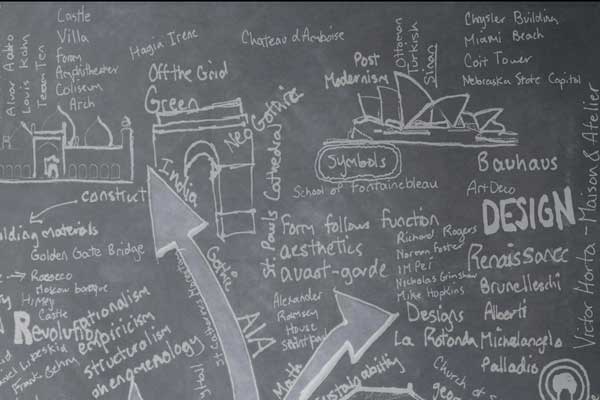
Design thinking is defined by Tim Brown, CEO of IDEO, as “a discipline that uses the designer’s sensibility and methods to match people’s needs with what is technologically feasible and what a viable business strategy can convert into customer value and market opportunity.” Design thinking aims to achieve innovation and solve problems while putting the […]
Common Types of Mind Maps and How to Use Them
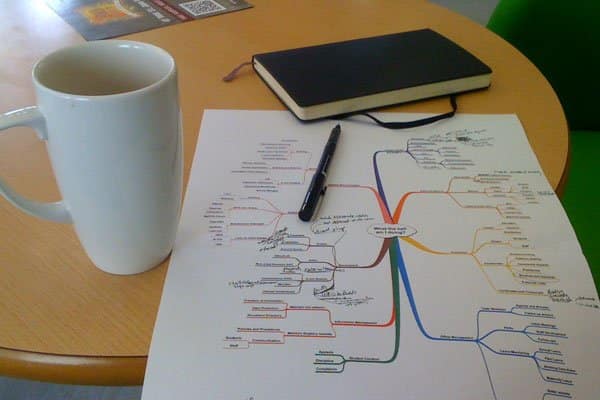
Mind maps are widely used by both designers and non-designers as a method for brainstorming in the early stages of projects in order to explore ideas or solve project problems. In a previous article, we explored the concept of mind maps and how to use them by starting with a core idea and expanding it […]
How Designers Can Use Rolestorming to Understand Consumers

Brainstorming techniques are used to achieve different goals, including finding creative ideas, solving problems, and understanding the target consumer during the ideation phase of the design process. However, brainstorming team members are affected by their own voices and personalities, which may affect their ideas that should reflect the consumer characteristics and needs instead. This can […]
Brainstorming Multiple Ideas Using Charette Procedure

Two main barriers arise when there are 15 people or more present in a brainstorming session when attempting to discuss multiple ideas or problems in the same time. Most brainstorming tools and methods focus on a small group of people discussing one single problem, focus the thinking process for all attendees in one particular direction. […]
Using the TRIZ Method for Creative Problem Solving

During the conflict and problems time in an organization, projects, at times, seem to be blocked from moving forward. At this crucial time, innovative and creative solutions are required to help the project survive through this difficult time. Problem-solving methods and tools are considered predefined ways that can be used to organize thoughts to carry […]
How to Run a Successful Brainstorming Session

Many companies and practitioners believe that brainstorming and creative thinking can help companies and teams to focus on their objective and find creative solutions for existing problems. However, many brainstorming sessions fail and do not provide any sufficient results. This failure leads to a waste of critical time at the early stage of the project […]
Six SWOT Analysis Tools and Applications
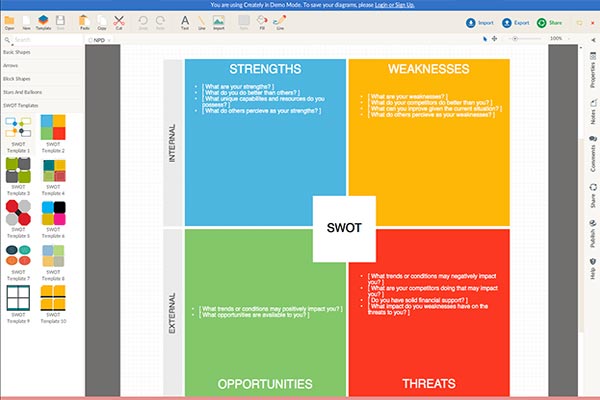
SWOT analysis is an essential tool for any organization to evaluate its position in the market based on four factors; Strength, Weakness, Opportunity, and Threat. While the strengths and weaknesses are considered internal factors, both opportunities and threats are considered external factors. In a previous article, we covered SWOT analysis as a tool to explore […]
Designorate Mind Map Template
In a previous article, we covered mind mapping as one of the effective tools to organize and visualize ideas during brainstorming sessions. Mind mapping can be used in the educational, business and personal domains. While there are many digital tools that allow teams to visuals ideas through computer generated applications; the traditional paper and pen […]
How to Use Mind Mapping for Better Thinking
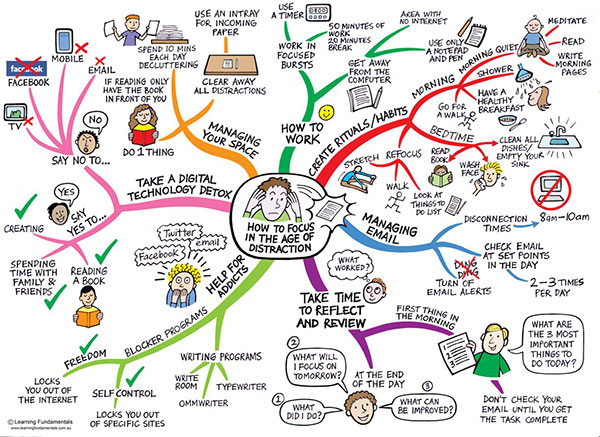
During brainstorming meetings and problem-solving sessions, many outputs are shared and presented in fractals. Many of the design thinking methods we discussed aims to direct the attendees thinking towards a specific flow in order to achieve creativity or find innovative solutions for problems. Mind mapping is one of the efficient methods that organize all these […]
A Guide to the SCAMPER Technique for Design Thinking

Creative thinking and problem-solving are essential parts of the design thinking process to turn ideas into innovation and break the barriers against creativity. One of the successful methods used in creative thinking is the SCAMPER technique. While there are different creative thinking and problem-solving techniques, such as reversed brainstorming, Hurson’s thinking model, the six thinking […]
Problem Solving Using Hurson’s Production Thinking Model

The ability to solve problems is one of the essential strong points inside successful organizations. Seeing the success of a companies’ innovation and creativity does not mean that everything went perfect during the production time. Each creative process or innovation to build a new product is faced with barriers and problems before and during the […]